- The weather outside is frightful… Jan 19
- Green getaways Jan 17
- Eating well all winter… Jan 15
- Warm on the inside Dec 09
- Give the Gift of Green Gadgets Nov 14
- See all posts
Sneakers
See all tips toGreenYour Sneakers
Choose a sneaker made from natural materials
Add
Organic cotton jeans. Check. Bamboo boxer briefs. Check. Sweatshop-free, naturally dyed T-shirt. Check. Looking to round out that eco-ensemble with fetching yet comfortable green footwear? Tread lightly with sneakers made of natural materials that pose less environmental dangers during the production process versus synthetic materials. Plus, parts of your new eco-kicks will biodegrade after they’ve worn out.
Find it! Sneakers made from natural materials
Below you'll find just a few of the footwear options available in the increasingly vogue world of green sneaks. Materials range from hemp (no, you cannot smoke your shoes after they've served their purpose) and cork; sometimes recycled materials are also used. Serious shoe fetishists can also peruse online retailers like Zappos.com and Shoes.com for eco-friendly low-tops, high-tops, and everything in between.
Adbusters Blackspot Sneaker
From the merry eco-pranksters at Adbusters magazine, John Fluevog-designed Blackspot Sneakers are crafted from 100 percent organic hemp and biodegradable rubber in a union factory in rural Portugal.Autonomie Project Ethletic Footwear
Pound the pavement (or the basketball or squash court) while minimizing your carbon footprint in these stylish vegan sneaks from Autonomie Project, a fair trade fashion house.Converse Chuck Taylor All Star
"Chucks," undoubtedly the most iconic of American sneakers, not only serve up comfort, durability, and that classic All Star appeal to athletes, rock stars, and your average Joes.iPATH Hemp Sneakers
Over 12 styles of affordable, fashionable skate-friendly sneakers crafted from synthetic and natural hemp are available from iPATH, a leader in sustainable streetwear.Keen Footwear
Portland, Oregon-based Keen Footwear offers a range of sneakers, sandals, and more for men, women, and children looking to enjoy the environment while also respecting it. The Ventura sneaker is made with recycled aluminum eyelets, non-synthetic and biodegradable rubber, and natural water-based glues.Kid Bean Children's Organic Hemp Sneakers
These children's shoes are made with grown-in-Romania organic hemp uppers and soles of reclaimed used tires. They are sweatshop-, chemical-, cruelty-, and leather-free. Available in various colors and sizes from 4 to 12 (for the older kids).Nike Considered
Green your swoosh. The Nike Considered design ethos—initially an individual line and now a company-wide mission—melds footwear performance and fasion with environmental sustainability for a sneaker "Where Innovation Meets Conservation."Patagonia Footwear
Patagonia's outdoor (think backwoods) and casual (think boardroom) shoes for men, women, and children feature hevea milk natural latex, hemp laces, recycled rubber outsoles, and are, true to Patagonia's raison d'être, environmentally responsible (and look darn good too).Rawganique Footwear
Rawganique—a Canadian company known for its deep green beliefs and easy-on-the-eyes models—offers vegan, sweatshop-free sneakers, sandals, and other eco-kicks for men and women that are made with certified organic European hemp.Simple ecoSNEAKS
ecoSNEAKS from Simple—"a nice little shoe company" that makes "shoes for a happy planet"—are made with sustainable and natural materials like organic cotton, hemp, bamboo, jute, cork, PET, recycled car and bike tires, and water-based adhesives.
Choosing a sneaker made from natural materials helps you go green because…
- Hemp, jute, cork, and other natural materials used in sneakers are grown chemical-free in a sustainable manner.
Conventional sneakers are usually made with PVC (polyvinyl chloride) which poses some hefty environmental hazards. Sneakers also contain eco-unfriently cotton and sometimes leather, too, the tanning of which results in some seriously toxic wastes. But new, more green sneaker materials are being developed all the time, some of which we feature here.
Hazardous sneaker materials
PVC
Sneakers made of PVC—a soft plastic used commonly in consumer products—pose severe environmental risks throughout their life cycle.[1] The manufacture of PVC creates toxic pollution, threatening the health of both factory workers and the communities surrounding factory sites. When disposed of, lead, phthalates—which are industrial compounds used to make plastics soft—and other toxic additives can leach into the ground and drinking water supplies from landfills.[2] Ninety percent of the phthalates used today are used to make PVC, and lead levels in the environment have increased by 1,000 times in the past few hundred years.[3][4]
Incineration of PVC products produces dioxins and furans, which are among the most toxic environmental contaminants and are known carcinogens.[3] Recycling is not an option with PVC plastic: one PVC item can contaminate a batch of 100,000 recyclable bottles.[3]
Conventional cotton
The detrimental environmental impact of the T-shirt is rooted in the farming of conventional cotton, considered the world's most pesticide-intensive crop. In the United States, an estimated one-third pound of agricultural chemicals is used to produce a single cotton T-shirt. Thus, a 100 percent cotton T-shirt actually contains 73 percent cotton—the remaining 27 percent is made up of chemicals and chemical residues.[5]
The various chemicals used to treat conventional cotton can harm beneficial insects and soil micro-organisms, pollute ground and surface water, and adversely affect the health of humans and wildlife—including fish, birds, and livestock.[6] Additionally, up to 70 percent genetically modified organism (GMO) seeds are used in conventional cotton farming in the United States.[7]
The farming of cotton is also water-intensive. Approximately 400 gallons of water are required to produce a single cotton T-shirt.[8] Organic cotton farming is not exempt from this reality either. Organic cotton may be chemical-free, but its production still requires significant amounts of irrigated water (though on the plus side, water supplies aren't at risk of being contaminated).[9]
Leather
Perhaps not-so-natural, leather used in any application—sneakers included—has many eco-drawbacks. Although desired by many, leather—the byproduct of animal skins—is ecologically harmful. For one, raising livestock for meat and leather production requires a great deal of feed, land, water, and fossil fuels. Factory farms generate 130 times the amount of excrement as the entire human population and the US Environmental Protection Agency (EPA) has noted that livestock pollution is the most damaging threat to American waterways.[10]
But beyond livestock rearing, the process used to tan leather has long been noxious and polluting. Toxins from tanneries includes mineral salts, such as aluminum, iron, and zirconium, as well as formaldehyde and coal-tar derivatives. Certain oils and dyes used in the tanning process are cyanide-based. Similar to the rest of the world, more than 95 percent of American-made leather is chrome-tanned. The production of chrome-tanned leather contributes waste to the environment, including chromium, which is classified as a hazardous material by the EPA. Chromium released from tanneries can contaminate drinking water and is dangerous to ecosystems as well as humans.[11] Tanneries also produce other pollutants, including protein, salt, hair, lime sludge, sulfides, and acids.
Eco-friendly sneaker alternatives
EVA: An alternative to PVC
The Center for Health, Environment and Justice (CEHJ) recommends Ethylene Vinyl Acetate (EVA) as a safer PVC-free plastic alternative.[12] EVA is a durable, flexible, transparent copolymer plastic that does not require a plasticizer. Becuase it does not require a plasticizer to be flexible, it is phthalate-free, and is therefore considered to be nontoxic. EVA is often used in sneaker footbeds as a shock absorber.
Organic cotton
Along with eschewing the use of chemicals and GMOs, organic cotton production nurtures soil health and fosters biologically diverse agriculture.[13] From 2000 to 2001, an estimated 14 million pounds of organic cotton was harvested in 12 countries—about .03 percent of total global cotton production. The United States and Turkey were the top growers, producing 79 percent of the world's organic cotton supply (along with China and India) for the 2005-2006 harvest.[14] Domestically, Texas is the leading organic cotton producing state. In the US alone, 6,577 acres of organic cotton were planted in 2005.[15] Despite being a leading producer, there are only 12 organic-certified cotton producers in the country and domestic cotton farming—both conventional and organic—is in decline.[16]
To gain official organic certification in the US by a government-approved certifier, cotton must adhere to the same criteria established by the US Department of Agriculture (USDA) for edible crops since cotton seeds and oil are commonly used in food products: 95 percent of the ingredients must be grown in soil that has been free of toxic pesticides and fertilizers for a minimum of three years and cannot contain GMOs.[5] So, while the cotton fiber used to make clothing can be certified as organic under USDA standards, an organic certification program for the clothing itself has not been established.[17]
As reported by the Organic Trade Association's 2004 Manufacturer Survey, sales of organic cotton fiber grew a total of 22.7 percent from 2002 to 2003. Sales peaked at around $85 million dollars. In that period, organic men's clothing grew by 11 percent and organic women's clothing grew by 22 percent. It was estimated that the total sales of organic fiber products in the US would grow an average of 15.5 percent each year from 2004 to 2006.[18]
In March of 2007, two mega-retailers with locations worldwide and significant fashion industry leverage, Sweden's H&M and San Francisco-based Gap Inc., introduced lines made from organic cotton. Both companies are also currently on the steering committee of the Better Cotton Initiative.
Cork
Sneaker footbeds can be made out of cork, which is a sustainable material. Cork can be stripped from the bark every 10 years without harming the tree. If the bark ages too much, the stripping process becomes harmful, so regular stripping is best for the health of the tree.[19]
Less-toxic rubber production
There are also new processes that can reduce the amount of toxins released during the production of rubber, which is often used in the outsoles of sneakers. By using natural materials such as vegetable oils and changing the processing methods, chemists have been able to develop a greener rubber outsole. With this process, 96 percent fewer toxic substances are released by weight. Sneakers with green rubber look, perform, and cost the same as those with traditional rubber.[20]
Hemp
Despite the controversy surrounding hemp's status as a legal crop—especially in the United States where it is considered a Schedule 1 controlled substance like marijuana—[21] it is an earth-friendly alternative to conventional cotton. Hemp produces three times as much fiber per acre as cotton. Like cotton, hemp requires water and fertilizer to grow but it doesn't need to be treated with pesticides or herbicides.[22] The farming of hemp benefits overall soil conditions by adding nutrients, fostering microbial life, and eradicating weed growth.
In contrast to the dearth of industrial hemp farming in the United States, the European Union initiated a program in the 1990s that provides hemp farmers with subsidies to encourage hemp fiber production. Over the last several years, the leading exporters of processed hemp fiber to the United States have been Romania, Poland, China, India, Canada, and the Philippines.[23]
Bamboo
Bamboo fiber, a natural fiber spun from the pulp of bamboo grass, resembles cotton in its unspun state.[24] However, that's where the similarities end as bamboo is considered a sustainable crop. It doesn't require the use of pesticides or fertilizers, needs little water, and is a self-renewing plant, meaning that new shoots grow on an uninterrupted basis. Bamboo also releases a great deal of oxygen into the air—even more than trees—helping to lower levels of carbon dioxide and curb soil erosion.[25]
The same natural antifungal, antibacterial agent found in bamboo plants that acts as a sort of internal pesticide (called "Bamboo kun") is also useful in bamboo clothing, controlling bacteria growth on the skin, as well as moisture levels.[26] This is especially beneficial for those prone to night sweats and for athletes. Bamboo fabric is a natural insulator and can be worn in both the summer to keep cool and the winter to keep warm.[24]
Jute
Jute can be used to make sneakers and is one of the softest natural fibers. It is derived from the fibrous stalks of the jute plant grown in China, India, and Bangladesh.[27] The fiber is loosened from the stem by soaking it in water.[28] Jute is a durable fiber and can withstand a lot of abrasion and it is resistant to mildew and mold. However, the fiber is absorbent and will deteriorate if consistently exposed to moisture and sunlight.[29]
Controversies
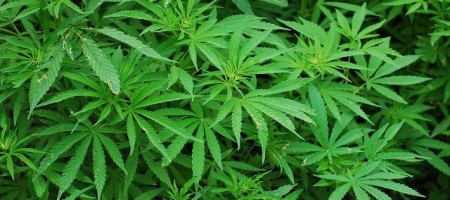
Hemp and marijuana are both members of the plant species Cannabis sativa and have both been considered Schedule One controlled substances in the United States since the late 1950s.[21] While it is a crime to grow all forms of cannabis in the United States, it is not illegal to sell hemp products such as paper and clothing. Cannabis grown for industrial purposes (hemp), and cannabis grown for recreational and medicinal uses (marijuana) have a different biological makeup. Both contain two distinct "cannabinoids:" the psychoactive THC and the anti-psychoactive CBD. Industrial hemp contains high levels of CBD and low levels—less than one percent—of THC, while the makeup of marijuana is the reverse. It is nearly impossible to achieve a narcotic high from smoking hemp.[30]
Glossary
- dioxins: Chemicals produced during industrial processes, most often combustion. They contain chlorine that can harm humans, usually when ingested through food grown in soil where dioxins have accumulated.
- phthalates: A group of chemicals used as plasticisers in PVC plastics that are known to be testicular toxins and can disrupt hormones.
- polyvinyl chloride (PVC): A strong plastic polymer that can be made flexible through the use of plasticizers. These plasticizers, not the PVC itself, can be toxic and carcinogenic. However, the monomer used to make PVC, vinyl chloride, is carcinogenic, posing a serious health threat to the people who work at factories where PVC is created.
External links
- Shoe Blog
- GreatGreenShoes
- Hemp Industries Association
- Sustainable Style Foundation
- green LA girl - Eco-shoes: Sneakers
Footnotes
- Illinois Attorney General - Madigan Announces Illinois Recall of Vinyl Baby Bibs Containing Lead
- Our Stolen Future - About phthalates
- Center for Environmental Health - Target Agrees To Reduce Use of PVC, a "Poison Plastic"
- The Center for Environmental Health - An Unnecessary Poison: Babies, Bibs, and Lead
- Organic Consumers Association - Clothes for a Change: Background Info
- Pesticide Action Network North America - The problems with conventional cotton
- Organic Exchange - About Organic Cotton brochure
- US Geological Survey - Water Facts
- Green Living Tips - Cotton and the Environment
- Cows are Cool - Leather: No Friend of the Earth
- US Environmental Protection Agency - Ground Water & Drinking Water: Factsheet on Chromium
- The Soft Landing - Are Ethylene Vinyl Acetate (EVA) Baby Teethers Non-Toxic?
- PAN Germany - Directory for Organic Cotton and Organic Cotton Products
- Organic Exchange - Organic Cotton Fiber Report: Executive Summary, Spring 2006
- Organic Trade Association - Organic Cotton Facts
- Grist - A Loom With a View
- BusinessWeek.com - Green Threads for the Eco Chic
- Organic Trade Association - Organic Cotton Facts
- Rainforest Alliance - Put a Sustainable Cork in It
- American Chemical Society - Green Shoes
- Globalhemp.com - Industrial Hemp Investigative and Advisory Task Force Report
- Industrial Hemp: For A Better Tomorrow - Environmental Beneftis of Industrial Hemp
- Federation of American Scientists - CRS Report for Congress: Hemp as an Agricultural Commodity
- wiseGEEK - What is Bamboo Fabric?
- Buy Organic - Benefits of Bamboo Clothing
- TreeHugger - Bamboo Sheets Keep Germs Out of Bed
- TreeHugger - Jute Age or Hemp Age
- International Jute Study Group
- Green Sage - Learning Center: Natural Carpet
- Arizona Industrial Hemp Council - Hemp vs. Marijuana


Latest Comments Across the Site