Wedding

See all tips to
GreenYour Wedding

Buy an eco-friendly wedding dress

Add
This feature is only available to GreenYour members. Please sign-up.

Never mind the notion that donning an eco-friendly wedding dress requires the bride to walk down the aisle in an unflattering garment. Eco-friendly wedding dresses—made from sustainable materials like organic cotton, silk, and hemp—are a key component to any green fairy tale wedding.

Find it! Eco-friendly wedding dresses

There's no doubt that the wedding dress—capable of inspiring both fear and awe—may be the most contemplated piece of clothing a woman will buy in her lifetime. Sometimes they're even selected before a mate. Brides-to-be generally know what they want, and increasingly many are looking towards options that offer elegance, comfort, and a minimized eco-footprint as they walk down the aisle. Going the vintage route is one option, as is enlisting one of these dressmakers that cater specifically to green brides.

Before you buy

Costly alternatives?

The farming of industrial hemp in the United States has been virtually banned by the federal government for decades because of its similarity to marijuana and must be imported from countries such as England, Germany, and Canada. Bamboo is primarily grown in China's Zhejiang Province although it is grown domestically for commercial purposes on a much smaller scale in Alabama, Georgia, and Mississippi. For these reasons, the environmental costs of transporting bamboo and hemp long distances should be considered and higher retail prices (in comparison to conventional cotton clothing) should be expected.

Blended fabric considerations

Clothes made from hemp, silk, or bamboo may or may not be exclusively made from that fabric. Often, designers use fabric blends, usually incorporating cotton. Although organic cotton is usually used to make the garment 100 percent "natural" this isn't a steadfast rule.

Buying an eco-friendly wedding dress helps you go green because...

  • Wedding day duds made of hemp, organic cotton, bamboo, and other sustainable fibers are produced without the pesticides found in conventional cotton or the petroleum used in synthetic textiles liked nylon or polyester.

The detrimental environmental impact of the bridal gown industry is rooted in the harvest and production of conventional cotton, considered the world's most pesticide-intensive crop. While only 2.4 percent of farmland worldwide is dedicated to cotton, it accounts for 24 percent of global insecticide sales and 11 percent of global pesticide sales.[1] In total, $2 billion worth of chemicals are sprayed on global cotton crops each year, almost half of which are classified as hazardous by the World Health Organization.[2] The various chemicals used to treat conventional cotton can harm beneficial insects and soil micro-organisms, pollute ground and surface water, and adversely affect the health of humans and wildlife alike—including fish, birds, and livestock.[3] Additionally, up to 70 percent genetically modified organism (GMO) seeds are used in conventional cotton farming in the US.[4]

The farming of conventional cotton is also water-intensive. Approximately 400 gallons of water are required to produce a single cotton undershirt.[5] Organic cotton farming is not exempt from this reality either. Organic cotton may be chemical-free, but its production still requires significant amounts of irrigated water (though on the plus side, water supplies aren't at risk of being contaminated).

Eco-friendly fabrics

Organic cotton

Along with eschewing the use of chemicals and GMOs, organic cotton production nurtures soil health and fosters biologically diverse agriculture. From 2000 to 2001, an estimated 14 million pounds of organic cotton was harvested in 12 countries—about .03 percent of total global cotton production. The US and Turkey were the top growers, producing 79 percent of the world's organic cotton supply for the 2005-2006 harvest.[6] Domestically, Texas is the leading organic cotton producing state. In the US alone, 6,577 acres of organic cotton were planted in 2005.[7] Despite it's top-producer status, there are only 12 organic certified cotton producers in the US and domestic cotton farming—both conventional and organic—is in decline.[8]

To gain official organic certification in the US by a government-approved certifier, cotton must adhere to the same criteria established by the US Department of Agriculture (USDA) for edible crops since cotton seeds and oil are commonly used in food products: 95 percent of the ingredients must be grown in soil that has been free of toxic pesticides and fertilizers for a minimum of three years and cannot contain GMOs. So, while the cotton fiber used to make clothing can be certified as organic under USDA standards, an organic certification program for the clothing itself has not been established. Furthermore, it's possible for a piece of USDA "Certified Organic" cotton clothing to contain 100-percent organic cotton but also contain harmful chemical dyes and finishes.

Organic farming may also be key in fighting global climate change. A study of conventional versus organic farming methods by the Rodale Institute discovered that organic farming combats global warming through carbon sequestration.[9] In agricultural applications, the more organic matter that is retained in the soil, the more carbon is sequestered. While conventional farming depletes organic matter through the use of chemical fertilizers, organic farming uses animal manure and cover crops, which actually build soil organic matter.

Organic farming further reduces atmospheric carbon dioxide (CO2) by using 37 percent fewer fossil fuels than conventional farming.[10] The Rodale Institute estimates that if all 160 million acres of corn and soybean farmland in the US were switched to organic farming methods, it would be equivalent to removing 58.7 million cars from the road, and would satisfy 73 percent of the proposed US Kyoto targets for CO2 reduction.[11]

Hemp

Hemp is considered an earth-friendly alternative to conventional cotton partly because it produces three times as much fiber per acre.[12] Like cotton, hemp requires water and fertilizer (in moderate amounts) to grow but does not need to be treated with chemical pesticides or herbicides and can be grown in a wide range of climates and terrains. The farming of hemp also benefits overall soil conditions by adding nutrients, fostering microbial life, and eradicating weed growth.

Hemp, however, is not perfect. The conversion of hemp fiber to hemp fabric, like many textile processes, often involves the use of water and bleach. Additionally, hemp typically costs twice as much as cotton for two reasons: hemp cultivation is restricted so there is less supply, and processing of hemp fiber into yarn requires specialized equipment which adds to the cost.

Although it is illegal to grow hemp in the US, the European Union initiated a program in the 1990s that provides hemp farmers with subsidies to encourage hemp fiber production. Over the last several years, the leading exporters of processed hemp fiber to the US have been Romania, Poland, China, India, Canada, and the Philippines.

Bamboo

Bamboo fiber is spun from the pulp of bamboo grass and it resembles cotton in its unspun state. However, that's where the similarities end as bamboo is considered a sustainable crop. Bamboo grass is one of the fastest growing plants in the world. Some species grow 30 inches every day.[13] In addition, the bamboo plants contain a natural antifungal, antibacterial agent (called Bamboo kun) that acts as a sort of internal pesticide, which negates the use of pesticides. Bamboo kun is also present in the fabric and controls bacteria growth on the skin, as well as moisture levels.

Found most commonly in Asia, Africa, the Caribbean, and Latin America, bamboo cultivation provides some important environmental benefits. It has net-like root systems, unique leaves, and dense litter on the forest floor, which protects against soil erosion and reduces rain runoff. This is true even in locations where it is difficult to grow plants, such as deforested areas, riverbanks, and places where earthquakes and mudslides are common.

A bamboo stand will release 35 percent more oxygen than an equivalent stand of trees and can sequester up to 12 tons of carbon dioxide per hectare. Bamboo is also very adaptable, and therefore can grow in a variety of ecosystems. With 1,500 or more species, bamboo can tolerate between 30-250 inches of rain per year and thrives from sea level to 12,000 feet.[14]

Silk

Produced by silkworms primarily in China, silk is considered a luxurious, durable, and eco-friendly (it's biodegradable and renewable) material that's used frequently in upmarket clothing like wedding dresses. However, silk may not be an option for vegans given that it's an animal byproduct. Silk varieties such as Peace Silk is produced in a manner that ensures that no silkworms are killed. Silk can also be treated with chemical additives in the manufacturing process.

Controversies

Organic cotton

The move towards organic farming has received a fair amount of criticism. Norman Borlaug, a Nobel Peace Prize winner, believes that organic farming techniques are detrimental to the environment. In a December 2006 issue of ''The Economist'' he suggests that low yields from organic farming results in the destruction of more land, while the use of synthetic fertilizers allows farmers to harvest vast amounts of, for example, cotton, in a small area of cultivated land.[15] Borlaug received the Nobel Peace Prize for his work on high-input crops that have increased world food supply, but has been criticized because of the resulting increase in reliance on monoculture cropping and inorganic fertilizer use. His stats have also been challenged by a 2008 report by the Agronomy Journal, which concluded that many organic, low-input crops can yield as much dry matter as conventional crops (and sometimes more) given the right weed control conditions.

Hemp and marijuana

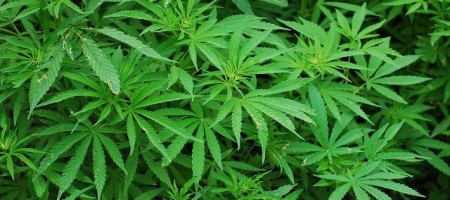
Hemp and marijuana are both members of the plant species Cannabis sativa and have both been considered Schedule 1 controlled substances in the United States since the late 1950s. While it's a crime to grow all forms of cannabis in the US, it's not illegal to sell hemp products such as paper and clothing. Cannabis grown for industrial purposes—hemp—and cannabis grown for recreational and medicinal uses—marijuana—have a different biological makeup. Both contain two distinct "cannabinoids:" the psychoactive THC and the antipsychoactive CBD. Industrial hemp contains high levels of CBD and low levels—less than 1 percent of THC, while the makeup of marijuana is the reverse. It's nearly impossible to achieve a narcotic high from smoking hemp.

There are movements in the US on both national and state levels to reintroduce industrial hemp as an agriculturally viable crop. Hemp advocates note the plant's potential as an alternative to tree-based paper, cotton-based clothing, and other items whose production poses environmental risks. The US Drug Enforcement Administration (DEA) and other opposing parties believe that if the ban on hemp farming is lifted it would become easier to grow marijuana alongside it. It is also often assumed that those who support industrial hemp farming are part of a marijuana legalization subculture.

Bamboo

There are several challenges facing bamboo's reputation as an eco-fiber. The growth in popularity of bamboo products has been detrimental to the natural forests in countries where bamboo grows. Existing forests are often cut down and replaced with bamboo plantations, negatively impacting biodiversity. Bamboo can be "over-managed" with chemical weeding and periodic tilling of the land to clear undergrowth. These practices increase erosion and produce a single-species plantation over large areas.

Although bamboo traditionally does not require pesticide and fertilizers, unless it's certified organic, you can’t be sure. In some growing areas, the intensive use of pesticides, weed killers, and fertilizers also affects the environment by releasing toxins into soil and waterways. For textiles, there are no guidelines comparable to Forest Stewardship Council (FSC) certified wood, which insures that a forest has been harvested in a sustainable fashion. However, FSC has begun limited certification of bamboo for wood products.

Glossary

  • carbon sequestration: The process by which carbon is captured (in the form of carbon dioxide, a greenhouse gas) from the atmosphere and incorporated into soil, ocean, and plant matter.
  • genetically modified organism (GMO): A GMO is created by merging the genetic make-up of two organisms, resulting in a desired byproduct that could otherwise not be found in nature.

External links

Comments

Sign In / Sign Up to Comment

Share Your Comments