Carpet and Rugs
See all tips toGreenYour Carpet and Rugs
Choose natural fiber carpets and rugs
Add
Choose carpets and rugs made of natural fibers, such as wool, sea grass, and jute, to support manufacturers that use renewable resources. Plus, natural fiber carpets are biodegradable so when they need replacing, you can shred them for garden mulch and skip the trip to the landfill.
Find it! Natural fiber carpets and rugs
The possibilities for natural carpeting and rugs have increased dramatically in recent years. Today, you can even purchase some online.
Carousel Carpet Mills (California)
Carousel Carpet Mills uses wool, cotton, and linen in carpets in addition to providing natural latex backing.CDC Carpets & Interiors (Texas)
In addition to providing traditional synthetic carpets, CDC Carpets & Interiors offers products made from wool, seagrass, sisal, coir, jute, bamboo, and cork.
Colin Campbell - Nature's Carpets (British Columbia)
Nature's Carpets are made from 100 percent pure wool, have ultra-low toxicity, and are completely biodegradable. The backing is made of jute and the whole lot is held in place with natural latex rubber.EarthWeave Carpet Mills (Georgia)
EarthWeave Carpets are constructed from natural wool, hemp, cotton, jute, and natural adhesives. The wool is never dyed (it comes in it's natural hues) and comes sans chemicals treatments.EcoChoices
EcoChoices offers a variety of wall to wall carpeting and rugs made from 100 percent pure wool or 100 percent organic cotton. Features include natural dyes, chemical-free construction, and natural rubber adhesives.Greensage.com
Greensage.com offers carpeting by the yard that is made from 100 percent undyed, untreated wool. Area rugs made from wool, coir, and sisal with latex backing are also available.Landry and Arcari (Massachusetts)
Landry and Arcari's wide variety of carpeting options includes many constructed from jute, sisal hemp, seagrass, and coir.Merida Meridian (Massachusetts)
Merida Meridian crafts beautiful woven floor coverings made from sisal, jute, wool, paper, and abaca, a plant that's related to bananas and purported to be one of the strongest plant fibers around.Naturlich Natural Home Design Center (California)
Naturlich Natural Home Design Center offers the Biohaus carpet line that is made from 100 percent natural materials, including wool, jute, and nontoxic adhesives.Sisal Rugs Direct Natural Fiber Rugs
This company's Boucle Collection made of 100 percent sisal with a small tight weave for a long-wearing and durable rug. Also available are rugs made from seagrass, wool, and mountain grass. Rugs are available in seven binding options.SisalCarpet.com
SisalCarpet.com offers products made from sisal, coir, jute, hemp, seagrass, and wool. They come in a variety of patterns and weaves as well as a range of natural colors.
Before you buy
Carpets and rugs made of natural fibers don’t off-gas volatile organic compounds (VOCs) like synthetic carpets. It's important that the backing and underlay pad are also made of untreated natural materials, too, so they don't off-gas. For example, look for pads made from untreated wool or camel's hair felt that are sewn, not glued, to a jute backing. Similarly, natural latex backing, is better than foam rubber, synthetic latex, or plastic. Also, ask if the carpet or rug was treated with stain, insect, or flame repellents, all of which can emit VOCs.
Choosing carpets and rugs made of natural fibers helps you go green because…
- They are made from renewable materials that are biodegradable.
- Most have natural stain resistance and are not treated with toxic stain resistant chemicals.
- They emit low amounts of volatile organic compounds.
More than 90 percent of all carpet and most machine-made rugs are made of petroleum-based synthetic fiber, a nonrenewable resource. The remaining 10 percent of carpet is made of fibers from plants and animals, both renewable resources.[1] Natural fibers are produced worldwide through a diverse process involving agriculture, ginning, spinning, weaving, dyeing, cutting, and final fabrication. These operations require specialized facilities, and it is likely that fiber will travel to several countries before the final carpet or rug lands in a retail outlet.
The carpet and rug industry does not have a specific certification for natural fiber products to ensure environmental responsibility because the diverse, multi-country manufacturing process makes it difficult to provide certification from crop to carpet. However, in 1995 the International Working Group on Global Organic Textile Standard introduced a certification to ensure the organic status of textiles from harvest through manufacturing. Products certified by this organization are labelled "Global Organic Textile Standard." Fiber crops can be also be certified organic by certifying organizations in the producing country or state.
Additionally, the same organizations that certify eco-friendly synthetic carpets can also certify natural fiber carpets. Both SCS Scientific Certification Systems and SMART Sustainable Flooring recognize bio-based materials in their certification standards. Products certified by these organizations bear the label: "SCS Sustainable Choice" and "SMART Sustainable Flooring" respectively.
Natural carpeting options
There are many nature materials from which to choose and can be used alone or in combination with others to form the carpet's face material.
Wool
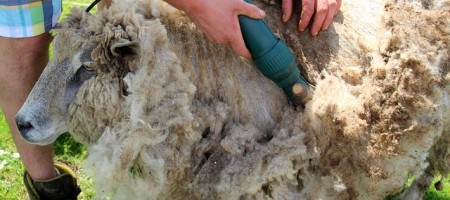
Most of the wool used for carpets and rugs is produced by 40 million sheep in New Zealand, which exports it to manufacturers in China, United Kingdom, India, Belgium, Italy, Australia, and Germany. Wool is a sustainable resource because the sheep’s fleece is shorn each year and will grow back. Naturally stain-resistant and flame-retardant, wool does not need added chemical treatments.
The “Wools of New Zealand Mark” is a registered trademark that refers to quality testing, rather than environmental sustainability standards. According to Wools of New Zealand, the label is found on products that pass 20 performance tests; contain at least 80 percent wool, with the majority (60 percent) being New Zealand wool; and are manufactured by a Wools of New Zealand approved and licensed manufacturer.
If the wool used in a carpet is not Certified Organic, it may contain pesticides. To control parasites such as lice, ticks, and mites, sheep raised with conventional farming practices are dipped in pesticide baths. This procedure creates health risks for the sheep and farm workers and contaminates ground water. Further, wool fiber is traditionally processed with toxic solvents and detergents. Conventional wool production also uses pesticides on pastures and chemicals in the feed. Organic wool is produced without using hormones or pesticides in the animal or its food.
Cotton
Cotton is widely used in bath rugs, throw rugs, and handmade rugs, but infrequently used to manufacture large area rugs and carpets. Consequently, cotton accounts for less than 1 percent of all the fibers used in the floor coverings industry.[2]
Unless the cotton in a carpet is grown organically, its production is the least environmentally friendly of the natural fiber carpets. Cotton farming uses only about 3 percent of the farmland around the world, but consumes 25 percent of all chemical pesticides and fertilizers.[3] Billions of pounds of nitrogen synthetic fertilizers are also used, resulting in runoff that can create aquatic "dead zones" in waterways.
Further, conventional cotton processing relies on vast amounts of hazardous synthetic chemicals, including fixers and dyes. Due to cotton's natural resistance to dyes, roughly half the chemicals used as dyes or fixers end up as waste in rivers and soil.[4] Chlorine bleaching to whiten the cotton before dying releases carcinogenic dioxins. Organic cotton, on the other hand, is grown and processed without dioxin-producing bleach, defoliants, pesticides, or artificial fertilizers.
Cotton is not naturally flame retardant and must meet strict US standards on the flammability of household textile products. Therefore, cotton carpets and rugs are made flame retardant with a phosphorous compound solution during finishing and/or by modifying the carpet construction or fiber blend. For example, blending cotton with flame retardant synthetic fibers or wool can reduce flammability.
Jute
Jute is commonly used as carpet backing and is one of the softest natural fibers. It is derived from the fibrous stalks of the jute plant grown in China, India, and Bangladesh. The fiber is loosened from the stem by soaking it in water. Jute is a durable fiber and can withstand a lot of abrasion and it is resistant to mildew and mold. However, the fiber is absorbent and will deteriorate if consistently exposed to moisture and sunlight.
Seagrass
Seagrass grows in large paddies in coastal wetlands of countries such as India and China where the paddies are flooded with seawater during the growing season. Carpets made of seagrass are rarely treated with stain-resistant chemicals and they cannot be dyed.
Sisal
Indonesia, Central America, and East and West Africa supply sisal fiber, which is harvested from the leaves of the agave plant. About 50 leaves are cut per plant per year. During the first 4 years, the plant is cut twice annually. Only one cutting is taken in the following years until the plant dies at 8 to 10 years. A total of about 300 leaves may be harvested during the economic life of each plant, resulting in a total of 500 to 600 tons of fiber per hectar.
The multi-step fiber extraction process begins with crushing and scraping the leaves. Then the pulp is washed away in a process that requires up to 11,800 gallons of water per hour. The pulp is then used as fertilizer on the fields, supplying nutrients and improving the soil structure. After washing, the fiber is graded, sorted, and hung in the sun to dry or put into a drying machine. The fibers are then beaten or brushed to remove remaining leaf tissue and to soften and separate them.
Coir
Coir fiber comes from the fibrous husk of the coconut. The coconut palm tree will produce the fibers for the life of the tree. Coir fiber production worldwide is 250,000 tons with India and Sri Lanka being the lead producers. More than 50 percent of fiber is consumed in the countries of origin.
Brown coir fibers for carpets are harvested from fully ripened coconuts, which take more than a year to ripen. After harvesting, the elastic and extremely strong fibers are soaked for many months. When soft, they are beaten, washed, dried, and spun into yarn for weaving into carpet. The natural color ranges from tan to brown. Other colors are produced through bleaching and dyeing. Coir fiber is durable, rot resistant, repels insects, and is difficult to ignite.
Controversies
Some natural fibers are not free from environmental woes. Because animals produce wool, there are concerns about sustainability. In a report by the Livestock, Environment and Development Initiative, the authors note that livestock is a significant contributor to the most serious environmental problems: land degradation, climate change and air pollution, water shortage and water pollution, and loss of biodiversity.
Additionally, People for the Ethical Treatment of Animals (PETA) has targeted Australia’s sheep industry with a Save the Sheep campaign. The organization notes that the sheer size of the sheep industry (100 million sheep) makes it impossible for the sheep to receive individual attention even for medical emergencies. Further, the campaign is trying to ban the practice of mulesing for both Australian and New Zealand sheep, in which a saucer-sized piece of skin and flesh is cut out from the sheep’s hindquarters to prevent the growth of wool and possible infection by blowfly eggs.
Glossary
- volatile organic compounds (VOCs): Organic solvents that easily evaporate into the air. VOCs are emitted by thousands of products, including paints, carpets, cleaning supplies, pesticides, building materials and furnishings, and may cause immediate and long-term health problems. VOCs are also considered a possible carcinogen, and can create ground-level ozone, the main component of smog.
External links
- Build it Green - Factsheet
- The Green Guide - Buying and Installing Carpet
- Green Sage - Learning Center: Natural Carpet
- International Jute Study Group
- Livestock, Environment and Development Initiative - Livestock’s long shadow
- The National Non-Food Crops Centre - Sisal
- Organic Trade Association - Wool Fact Sheet
- Oregon Tilth - Fiber & Textile Handling Program Summary
- International Working Group on Global Organic Textile Standard
- Royal Botanic Gardens Kew - Rope Making Fibers Information Sheet
- US Environmental Protection Agency - Volatile Organic Compounds
- Wools of New Zealand - The Wools of New Zealand Brand
- World Floor Covering Association - How Area Rugs are Made


Comments
Share Your Comments